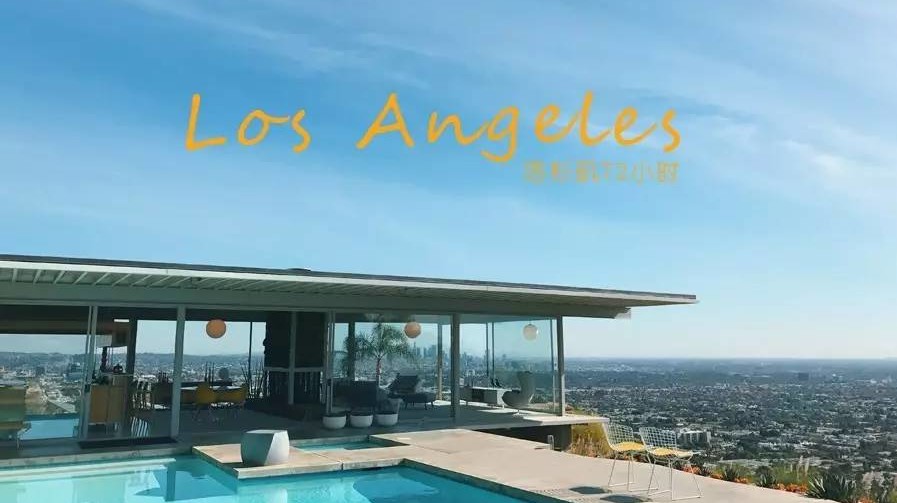
Los Angeles acknowledges those travelers who think differently. Its most notable cultural attractions are not limited to studio tours and red carpet events. Their unique offerings include outdoor movie showings at a cemetery, and museums where the architecture is as fascinating as the art within. A place where private collections turned into public works, and the recreation of historic sites; a sunset view may even be as important as a visit to a gallery.
Hollywood Forever Cemetery, founded in 1899, is one of LA's most unique and local experiences. Sprawling over 62 acres, it is one of the oldest cemeteries in the city and holds over 90,000 bodies, including some of Hollywood's biggest names. There is a beauty to the solid monuments and film history, but the vibe is far from somber. The site has been the host of many events including movies, concerts, and a cultural gathering. During the summer, it has been the site of many outdoor movies (and the Bohemian crowd loved it). They often held musical performances. It is a quiet place to reflect and to watch LA at its most avant-garde. Hollywood Forever Cemetery’s address is 6000 Santa Monica Boulevard, Los Angeles, CA 90038.
The ninth site is the Los Angeles Central Library, a civic building that demonstrates public architecture can be generous and inspiring. It was completed in 1926 and designed by Bertram Grosvenor Goodhue. The library is a confident synthesis of architecture, sculpture, and painting. The Egyptian and Mediterranean influences are visible on the exterior, particularly the vividly colored pyramid shaped roof and torch icon which symbolizes the pursuit of knowledge. The interior also contains many treasures. The second floor with its Art Deco Arabic style and murals depicting various themes of California history along with a dazzling chandelier is reason enough to visit the library even if one doesn't intend on checking out a book. The library is open to everyone. It provides a welcoming spirit and serves the public. You can find the library at 630 W 5th St, Los Angeles, CA 90071.
The eighth site is the Marciano Art Foundation on Wilshire Boulevard. It showed how successfully an old building can be given a radically different purpose. The site was formerly a Masonic temple, and remnants of that past survived in its rituals, sculptures, and a room dedicated to Masonic objects. Its later identity focused on contemporary art, bringing bold modern work into a setting shaped by religious and fraternal history. The juxtaposition was the point: traditional imagery and experimental art inhabited the same building without trying to smooth over their differences. The foundation was located at 4357 Wilshire Boulevard, Los Angeles, CA 90010.
The Space for Annenberg Photography ranks seventh because it was the first photo specific museum in the US. They have also done a lot of exhibitions that dealt with real world problems such as the global refugee crisis. The building incorporated a design with some of the elements of a camera such as a circular digital gallery and an iris that works like a lens aperture. The space is located in the office district of Century City at 2000 Avenue of the Stars, Los Angeles, CA 90067.
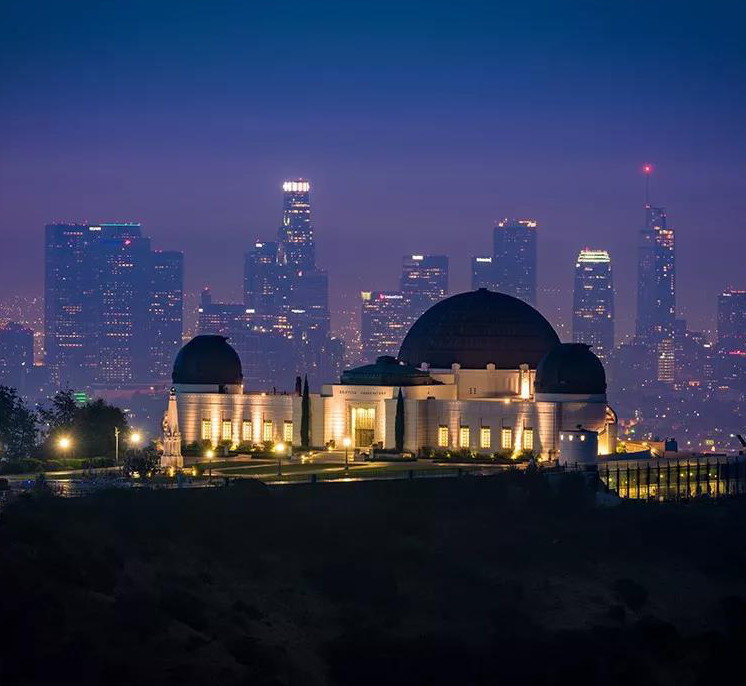
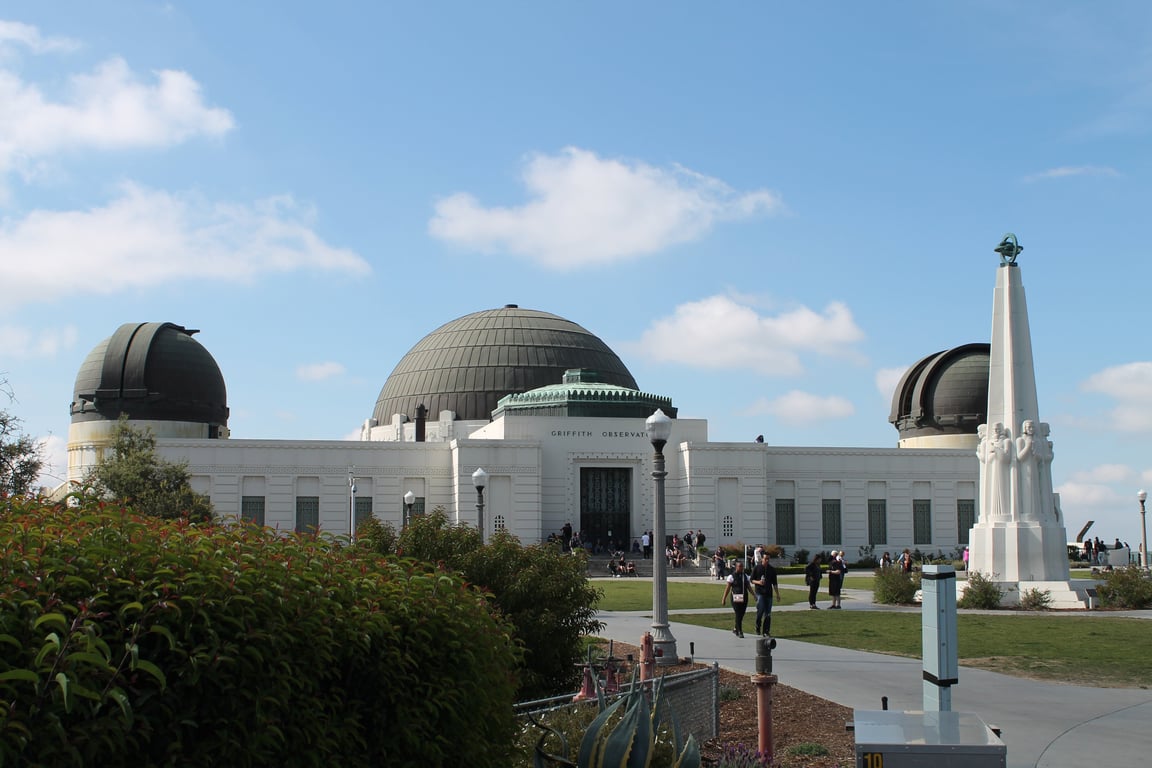
Griffith Observatory ranks sixth. This is one of the best places in the city to get a good view of the city for free. It is located in the hills to the northwest of downtown LA. The Griffith Observatory has been attracting visitors for over 80 years due to its unique combination of science, cinema and stunning views. The interior of the building has Foucault pendulums and some Tesla coils that help to teach astronomy in a very hands on and accessible way. During the day, there are telescopes that are available for the public to look at some of the stars, planets and the moon and there is no need to leave the city to do this. There is also a good reason to continue walking up into the hills. The view of Los Angeles at night is worth it. The observatory is 3,200ft above sea level and it really helps you understand the scale of the city because you can see all of downtown Los Angeles, Glendale and West Hollywood spread out in front of you. Griffith Observatory is located at 2800 East Observatory Road, Los Angeles, CA 90027, and evenings can be cold, so a jacket is sensible.
Fifth on the list: Venice Canals, a calmer and more personal version of Los Angeles. Over a hundred years ago, developer Abbot Kinney tried to build an American Venice in California. While the grand ambition faded with shifting urban priorities, the surviving channels turned into a miniature residential world of streets, gardens, boats, and quirky houses. Upon entering the canals from the paths near the intersection of Washington Boulevard and Strong Drive, visitors can see houses from various periods and of markedly different styles. One garden may be adorned with star-like string lights, while another is furnished with stylish outdoor furniture;
Then, the palms, flowers, and lavender, as well as rosemary, will soften the edges of the water. The attraction is not an imitation of Italy; they have a charm all their own. In combination with improvisation and domestic habits, they create a uniquely Californian essence. The canals are located in Venice, CA 90292.
Number Four is the Getty Villa located in Pacific Palisades. It is a classical alternative to an escape from the modernist energy that Los Angeles possesses. J. Paul Getty constructed his fortune in oil, but his ambition as a collector of antiquities resulted in the creation of a public museum. The villa has more than 4,000 objects from ancient Greece, Rome, and Egypt from a time period of 6500 BC to AD 500. These pieces are organized around gods, goddesses, mythology, and the themes of the ancient Mediterranean world such as the Trojan War. The Getty Center is more sleek and contemporary whereas The Getty Villa is more dramatic and has more history. The commitment to antiquity in a city full of contemporary art is different and exciting. The Getty Villa is located at 17985 Pacific Coast Highway, Pacific Palisades, CA 90272.
The Getty Center is, at number three, one of the clearest statements of cultural ambition in Los Angeles. Located high above the city, its white buildings, gardens, terraces, and open courtyards constitute an institution that seems more like a small hilltop campus than a single museum. Visitors arrive by tram, with West Los Angeles unfolding below. Six gallery buildings sit among landscaping, and outdoor spaces designed for wandering rather than rushing. The collection extends from medieval art to major Rubens, Cézanne, and Van Gogh European works, alongside manuscripts, photographs, drawings, sculpture, and decorative arts. However, the Getty Center's greatest achievement is legitimizing lingering. It is at the central garden, and the changing views and the site will slow down your visit. It is at 1200 Getty Center Drive, Los Angeles, CA 90049.
Number two is the Hammer Museum, a private collection that transformed into a more externally focused cultural institution. Founded in 1990 by Armand Hammer to house his collection, it has holdings that span Impressionist and Post-Impressionist works, a sizable grouping of pieces by French satirist Honoré Daumier, and works related to Rembrandt, Titian and Chardin. However, its strongest identity is its focus on Los Angeles artists and contemporary practice. Here, painting, photography, film, and installations cohabit, and screenings have contributed to its reputation as a venue where art is experienced, rather than simply presented. The Hammer Museum is located at 10899 Wilshire Boulevard, Los Angeles, CA 90024.
First off, The Broad, right in the heart of downtown Los Angeles, captures the energetic and visual essence of the area. On Grand Avenue, the futuristic look, with a perforated structure and dramatic interior space, helps create a vibe that is part gallery and part architecture. The third-floor gallery even has natural light thanks to hundreds of skylights, while the building's curving design seems to create a tunnel or wormhole. The museum has been very popular thanks to Yayoi Kusama's Infinity Mirror Rooms, where the immersive experience seems to make waiting in line more than reasonable. However, the collection is truly what deserves a lot more of your time than just that picture. Eli and Edythe Broad collected more than 2,000 works with big names such as Andy Warhol, Barbara Kruger, and Jean-Michel Basquiat. Next door, Walt Disney Concert Hall is designed by Frank Gehry, with his trademark layered steel design. Together with the performance spaces that serve the Los Angeles Philharmonic and choral programs, these buildings make Grand Avenue an amazing reason to spend a day downtown. The Broad is located at 221 South Grand Avenue, Los Angeles, CA 90012.
The best of Los Angeles is rarely neat and clean. The culture is ancient and modern, highly publicised and firmly private, glamorous and strangely intimate. These ten places show the city at its best.